

Interview with Carnelia Cortés, the female bear from Barcelona
Elvin Novruzov, an Azerbaijani artist who left Azerbaijan and found himself in Barcelona
 06/Apr/26
 1673
1673
Interview with Carnelia Cortés, the female bear from Barcelona
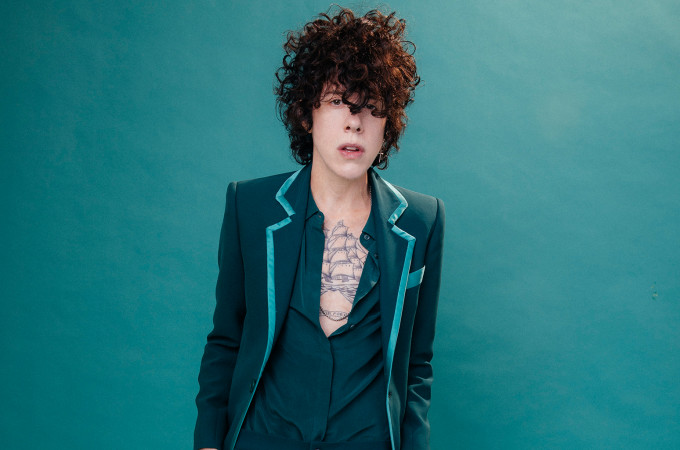
Elvin Novruzov, an Azerbaijani artist who left Azerbaijan and found himself in Barcelona, is a live singer, a writer of his own songs, a colorful member of the bear community, and a drag queen. She goes by the name Carnelia Cortés, and is an interesting person, a powerful voice, and a very personal story of liberation. We spoke to Carnelia Cortés about her roots, migration, drag, music, and her desire to make the world a little better.
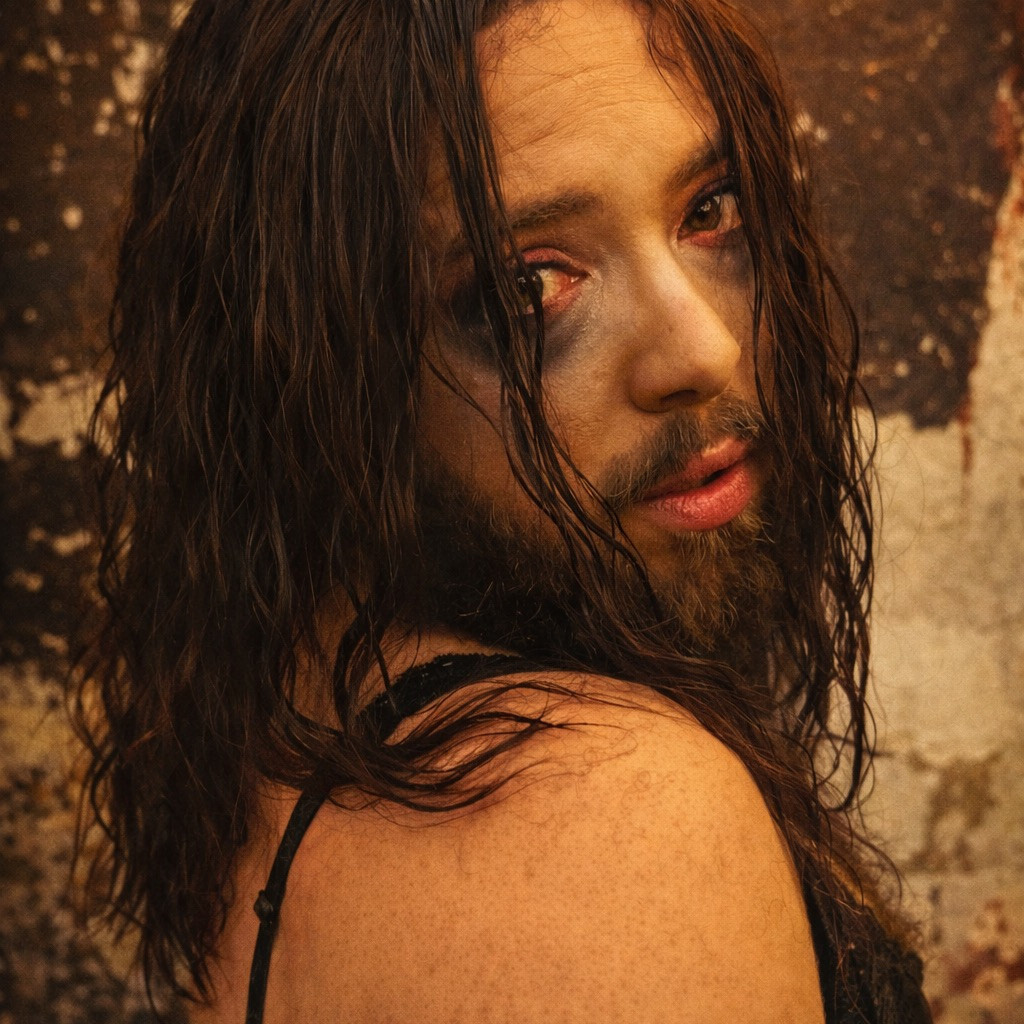
"I was born in Azerbaijan, but Carnelia was born in Barcelona"
There comes a moment in everyone's life when they decide to be themselves. For Carnelia Cortés, that moment was in Barcelona. Carnelia, who moved to this city about a year and a half ago, said that this step was not just a geographical one, but an internal turning point.
She neither denies nor hides her Azerbaijani past. On the contrary, her roots are important to her, part of her identity. But the person we know as Carnelia, that sense of freedom, that openness, these were formed in Barcelona.
"On the one hand, Carnelia was born in Azerbaijan — my roots, my history are there. But in a deeper, symbolic sense, she was born in Barcelona. Because it was here that I was able to fully open myself, feel free, and live as the person I am."
There is a lot in this sentence. "To live as the person I am" is perhaps the simplest, most difficult, and most powerful expression. Because this right is not given to many in many places.
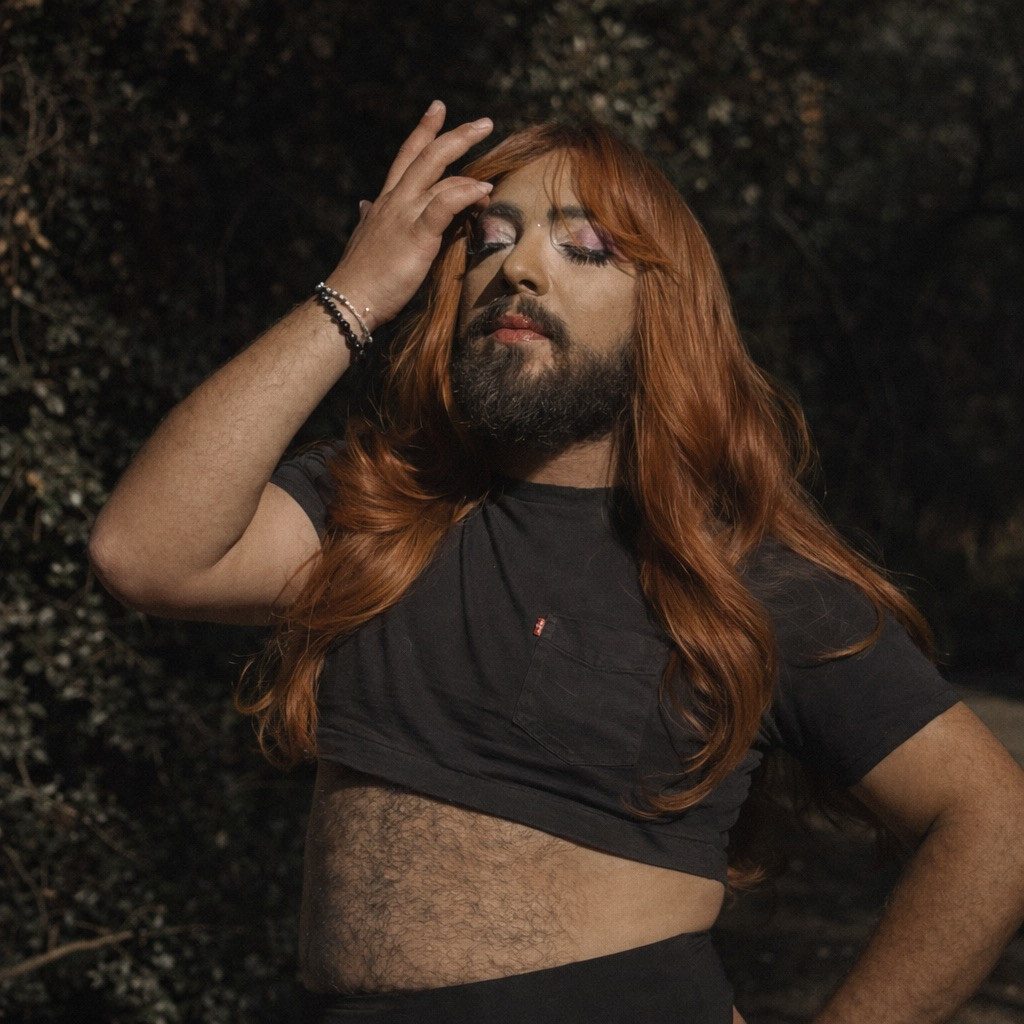
"Osa" — female bear, bear aesthetics and self-acceptance
An integral part of Carnelia Cortés' drag art is Osa, which means "female bear" in Spanish. This choice is not accidental. Carnelia refers to herself as a bear community, a community of men who are big, hairy, outside the concept of "standard beauty", but who wear it all with pride.
"I myself am a 'bear' and it was very natural for me that Carnelia would be a 'female bear'. It is a reflection of myself in my drag image."
Bear culture is not just a symbol of body type, but of self-acceptance, of existing without trying to be "perfect". Carnelia feeds off this aesthetic both personally and artistically.
But she also highlights a very important nuance here, dispelling a common misconception about drag:
"I have never considered myself a woman and I never will — I see myself as a man. Drag for me is not about changing gender, it is a form of expression. That is why I maintain masculine characteristics: I do not shave my body, I do not hide my belly, I show myself as I am. It is my way of combining my male and female sides."
Who is Carnelia?
How would you describe Carnelia to someone who has never met her? This question sometimes leads people to long, complicated answers. Carnelia chooses simplicity:
"It's an image of freedom and self-acceptance. It's a combination of strength and vulnerability, masculine and feminine energy. It's just me — at my most honest and open."
Did drag find her, or did she find drag?
Some people come to drag late, in midlife, by chance, on someone's recommendation. That's not Carnelia's story. That curiosity was always there, just waiting for a door to open for her.
"It's always fascinated me. I've always wanted to try this image, to see myself in a different light. And one day I just allowed myself to do it — and I realized that this is really mine."
"I allowed myself to do it," these three words are one of the most powerful moments of our interview. Because often the main obstacle is not others, but ourselves.
Barcelona: Not a city, but a mirror
Barcelona is one of the most vibrant LGBTQI+ cities in Europe. The Eixample neighborhood, drag shows, queer culture, these are all part of the city here. Carnelia describes the impact of this environment on her:
"I saw how people live freely here, how they are not afraid to be themselves. Nobody cares who you are or how you look — what matters to people is your creativity. Everything else is personal."
This environment has not only provided Carnelia with a platform to develop her creativity, but also:
"It inspired me a lot and gave me a kind of push — it gave me confidence that I was on the right path."
Sometimes what a person needs is not guidance, but just reassurance. Barcelona was that reassurance for Carnelia.
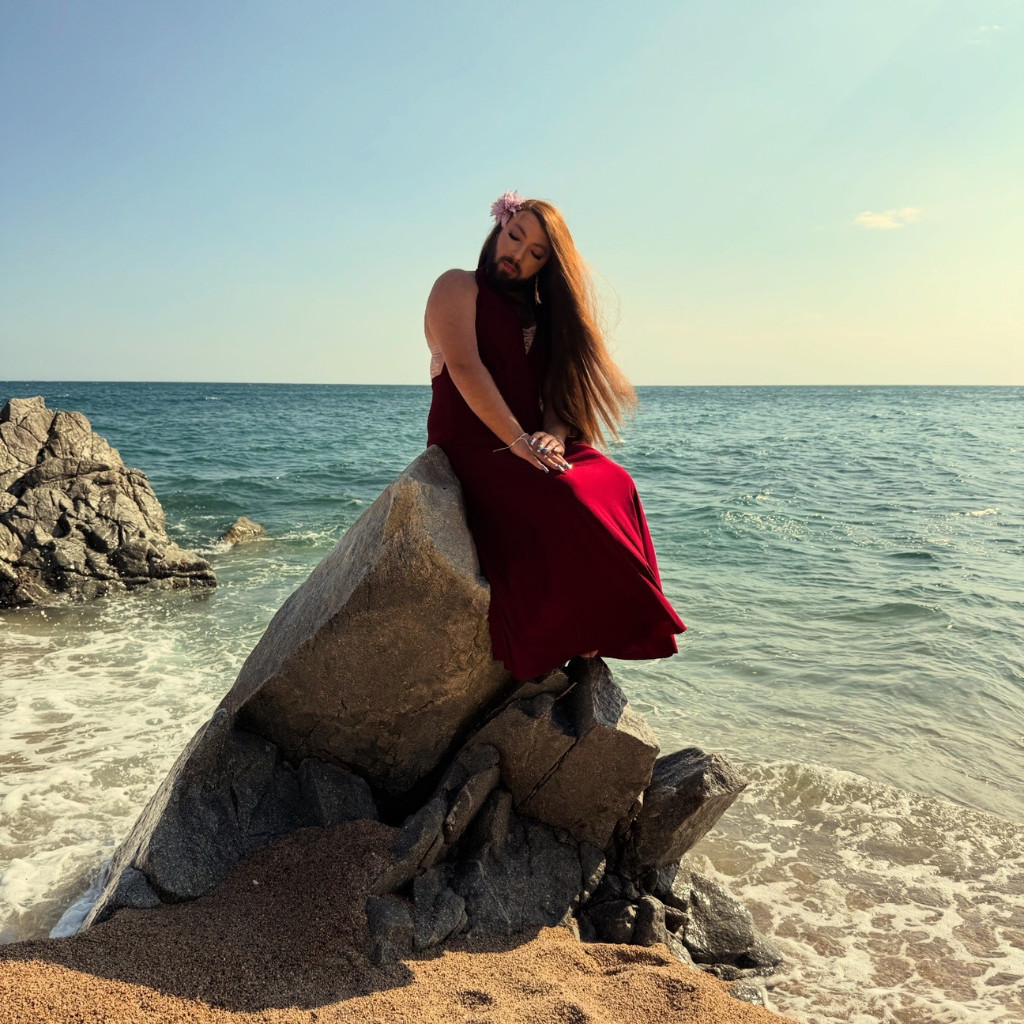
She doesn't lip sync. She sings live.
When most people think of drag queens, they think of flashy costumes, dramatic makeup, and lip syncing. Carnelia rejects this stereotype outright:
"I don't lip sync like a classic drag queen. I'm a drag artist who sings live — my main thing is my voice. I'm not a beauty blogger and I don't focus on makeup. I know that I wear simple makeup and that's enough for me. For me, the main thing is music, voice, and emotion."
This puts Carnelia in a unique position. She is a singer and a songwriter. She writes the lyrics and music for her own songs, and works on their sound. In covers, even though she is not the author of the song, she still interprets the music.
Where does inspiration come from? How are songs born?
"It's different every time. Sometimes it all starts with the words, sometimes with the melody, and sometimes just with a strong emotion — joy, sadness, or some other feeling. For me, the main thing is to capture that feeling and turn it into music."
"Qısqana, qısqana" — A Bridge from Azerbaijan to Barcelona
Carnelia's latest project is both a personal and symbolic step. She has created a drag cover of the song "Qısqana, qısqana" by the famous Azerbaijani singer Natavan Habibi. This is a coming together of two worlds, two identities, two cities.
"This song has always been very close to me and I liked it very much. Frankly, I don't know why I didn't do a cover before. In general, Natavan Habibi's work inspires me a lot. And one day, the idea just came to me: I want to do this song in drag, in my own style. That's how this project was born."
To Azerbaijani viewers: "Listen to the music first"
Carnelia is reaching an increasingly wide audience through social media. This audience includes viewers from Azerbaijan, and she knows what their reaction might be. But she doesn't care. He just has one wish:
"I understand that it might be new for them to be a man performing in a female guise. But I want them to focus on the music first — because that's more important."
Then she touches on a very interesting point, that this phenomenon is actually not foreign to Azerbaijani culture:
"Similar things have happened in our culture. Artists like Rafael and Coshgun also enter into female guises. This is also a form of drag. If this is accepted as normal, why something new is met with shock — I don't understand."
This comparison is both thought-provoking and true. A male artist entering into a female guise is not new in Azerbaijan. Carnelia simply translates it into the language of her time, her own aesthetics.
And in the end, she says in the simplest, most obvious way:
"If you don't like it — leave. If you like it — welcome."
Reaching the world, reducing hatred
When talking about Carnelia, the word "dream" sounds small. Because she is not talking about ordinary career goals, but about a much bigger goal:
"Carnelia's dreams are very big. And I am sure that I will achieve them — because if I have set a goal all my life, I have achieved it. But this is not just a personal success. I want to reach the whole world. I want to give important messages to people. I want people to be better, more understanding. To accept themselves as they are. To reduce hatred in the world, even a little."
"If my art can help even one person — that is already a big thing for me. There is still a lot ahead. I will reveal it over time."
Powered by Froala Editor