

Aurah Jendafaaq on Visibility, Silence, and Survival
Born in Baku, raised in Berlin, and forged on queer stages across Europe, Aurah Jendafaaq is redefining what visibility means for the Caucasus diaspora
 01/May/26
 1804
1804
Queer Caucasus, Out Loud: Aurah Jendafaaq on Visibility, Silence, and Survival
Born in Baku, raised in Berlin, and forged on queer stages across Europe, Aurah Jendafaaq is redefining what visibility means for the Caucasus diaspora.
By Hamida Giyasbayli
At the kitchen counter of their family’s Berlin apartment, Aurah was preparing a cup of tea with trembling hands. Behind them, their parents sat at the table, voices rising, not in anger, but in confusion.
“You never tell me anything,” Aurah remembers their mother saying. “Where are you going? What are you doing? You don’t let me be part of your life.”
Then their father joined in: “You’re so cold. You’re always in your room. You never share anything.”
Aurah stood with their back turned, forcing the tears not to fall. “The truth,” they say now, “was that there was nothing I wanted more than to share my life with them. But I thought I was protecting them by staying silent.”
That kitchen scene, ordinary, intimate, devastating, captures the emotional center of Aurah Jendafaaq’s story. A story shaped by migration, queerness, performance, and a lifelong negotiation between visibility and survival.
Today, Aurah is one of the most striking voices in Berlin’s queer performance art scene: a drag performer, curator, host, musician, and community-builder whose work insists on something that has long been denied to people like them, space. Space to exist, to be seen, and to imagine a future for queer people from the Caucasus that is not defined solely by fear.
From Baku to Berlin
Aurah Jendafaaq was born in Baku in 1992. When they were four years old, their family moved to Germany. “My real, continuous memory starts here,” Aurah says. “I went through kindergarten and school in Germany, while I was going through the full migrant experience.”
The move followed the death of their maternal grandmother. Aurah’s father had long dreamed of leaving Azerbaijan, hoping for better opportunities, especially for his children. Their mother agreed, even though she was already in her mid-forties. “Looking back now,” Aurah reflects, “I realize how enormous and brave that step was.”
Berlin became home, specifically Kreuzberg, a neighborhood Aurah claims with pride: “Not many people can say that about themselves…but I can, and will use every opportunity to do so!”
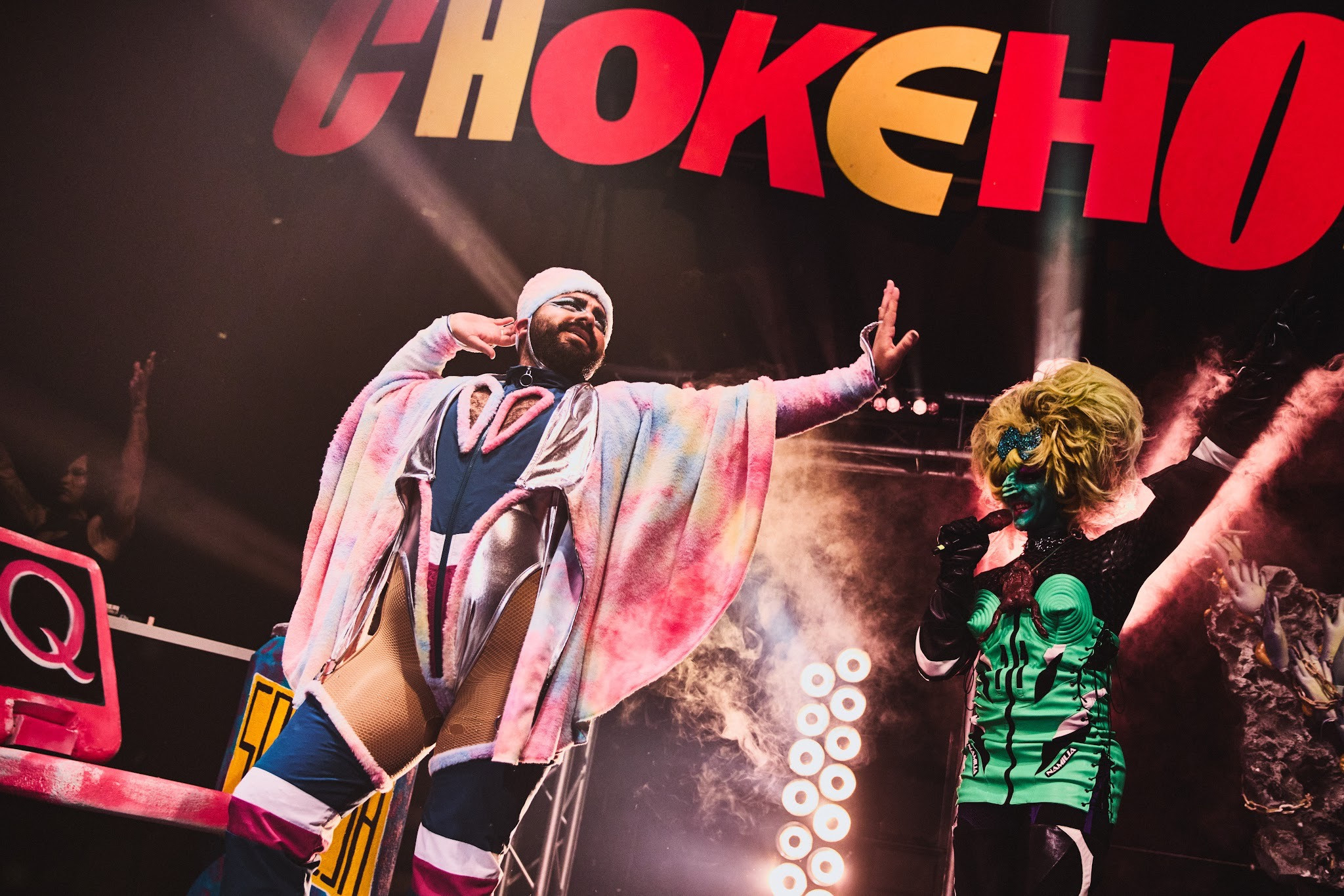
p/b Julia Schwendner (@thisisjuliaphotography)
Yet growing up Azerbaijani in Germany came with a deep sense of isolation. “For the longest time, I thought me and my family were the only ones here,” Aurah says. They remember a moment at a metro station, one episode in a longer pattern of classmates trying to degrade them and their heritage, when someone asked, flatly: “What is Azerbaijan?” It wasn’t a joke, the question was whether the country existed at all.
That erasure would later become a central engine of their work.
A Body That Wanted the Stage
Performance entered Aurah’s life early, long before they had language for queerness or gender. A family story was retold during summers spent visiting relatives in Azerbaijan, when they were teenagers: as a small child, they were mesmerised by Azerbaijani pop icon Brilliant Dadaşova on television. It was framed as funny, though it carried a quiet note of shaming
“Whenever she sang Ağacda Alma, I would completely lose it,” Aurah says. “I’d put on my mother’s high heels, sing and dance like I was on stage, pretending to be her.”
What once was used to embarrass Aurah in front of everyone has since been reclaimed. “That’s where my performative energy really began,” Aurah says. “Those stories were used to make me feel uncomfortable but now they belong to me.”
As a teenager, music became a mission. Eurovision, in particular, felt like destiny. “My biggest dream was to represent Azerbaijan,” Aurah says. “Not the state, but my parents, my mother, my father, their stories.”
Even then, representation was never about flags or institutions. It was about lineage. Years later, that impulse has only deepened. Aurah now actively researches their parents’ cultural worlds: the films their mother watched as a child, the music their father played when he was in a band, trying to feel into those realities and translate them into their own work. Living in migration, Aurah says, creates a constant need to locate yourself to identify, to belong.
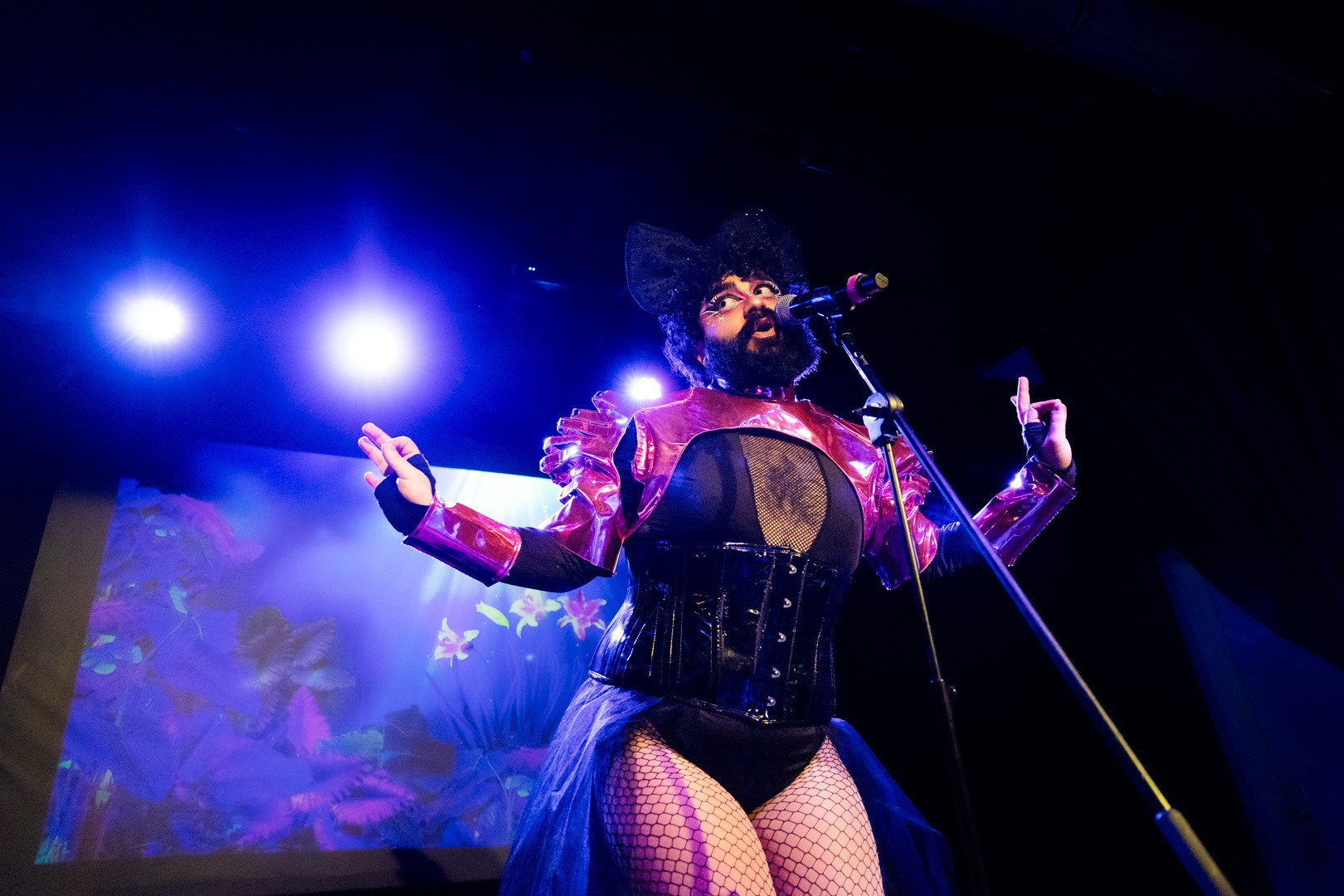
p/b Claudia Hammer (@claudiahammer.photo)
Money was scarce, so Aurah improvised. At a youth center in Kreuzberg, they received free singing lessons. “I was extremely enthusiastic, maybe even annoying,” they admit. “I’d pull social workers into rehearsal rooms, asking them to listen, to tell me if a song suited my voice.”
They wrote obsessively, learned basic sound production, and built demos at home. Looking back, Aurah sees the hunger beneath the ambition. “I needed recognition,” they say. “I believed that if I achieved something big enough, it would protect me, make my queerness untouchable.”
Visibility in a Locked-Down World
After finishing school, Aurah pursued music as a singer-songwriter, supported strongly by their parents, especially their father, who drove them to auditions for German television talent shows. A later attempt to study and break into the Azerbaijani music industry in Baku proved demotivating, lacking networks or institutional support.
Aurah shifted toward stability, studying social work and spending several years working with children, older adults, people with disabilities, refugees, and queer communities. The work offered insight into many social realities, but pulled them away from their own artistic voice.
Performance returned unexpectedly in 2019 during an internship at Germany’s first queer youth center in Cologne. When asked to host a show at the center’s affiliated queer bar, Aurah agreed on one condition: “Only if I can do it in drag.” Something clicked.
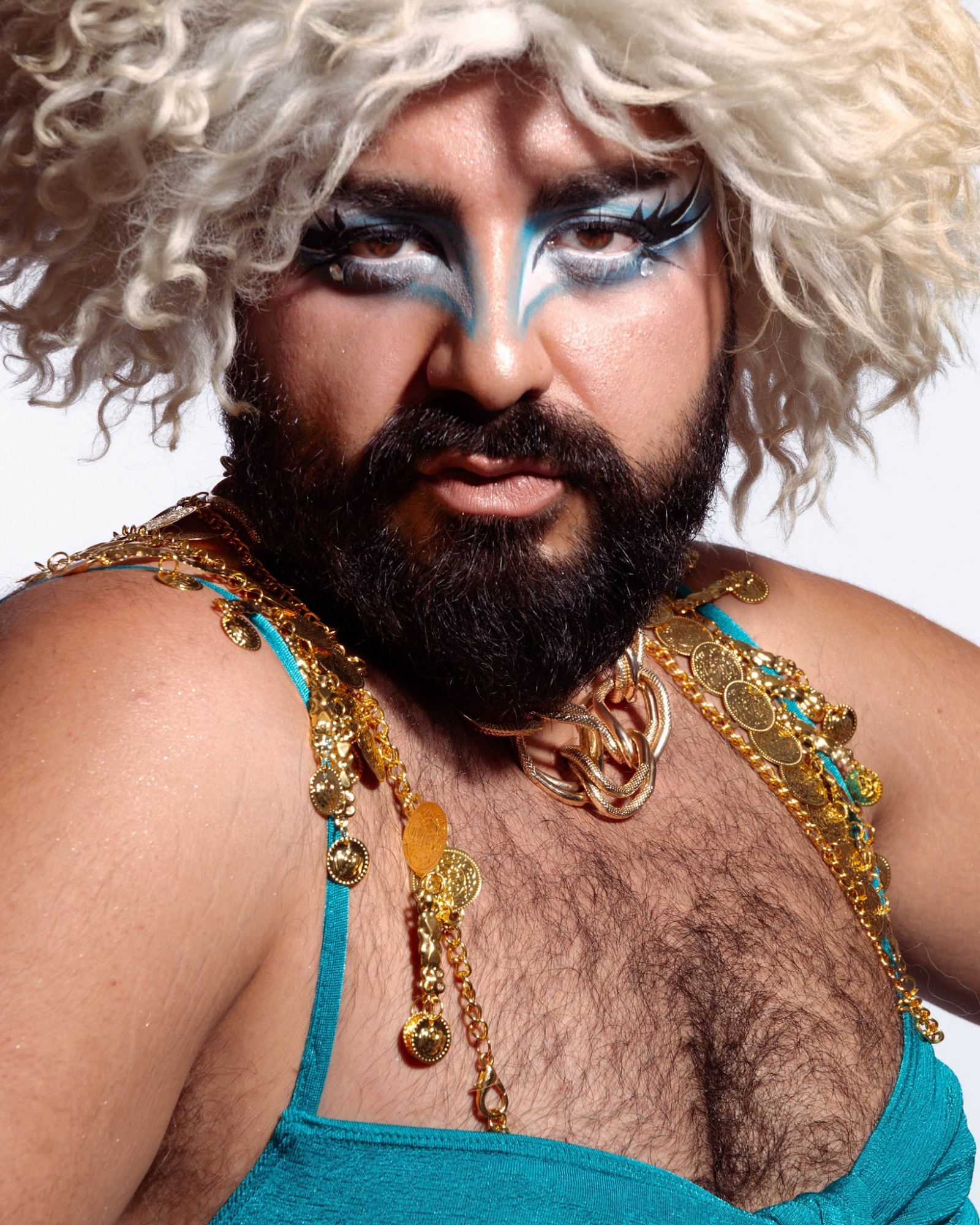
p/b Pelle (@pellebonink)
When the pandemic shut venues down, queer performance moved online. Aurah joined digital competitions, including the Eurovision-inspired Euro Diva, which they won in its second year. “That reassured me that my work hadn’t been in vain,” they say. As live performances returned, their career continued almost seamlessly.
Aurah went on to perform with various queer collectives, expanding their practice into dance, drag, and gender-bending performance, and establishing themself in Berlin’s queer scene. Their work has taken them to international stages including Venice Performance Art Week, Lollapalooza, Fusion, and WHOLE Festival. “All my friends had gone to Fusion as visitors for years,” Aurah says. “And suddenly, I was performing there. That pushed me to continue.”
Yet visibility came with fear. For years, Aurah kept their Instagram private, worried that family members, especially from Azerbaijan, might find out. “If it’s not on Instagram,” they say, “it basically didn’t happen.”
The turning point came with an invitation to Mx. Kotti Pageant.
Masculinity, Unmasked
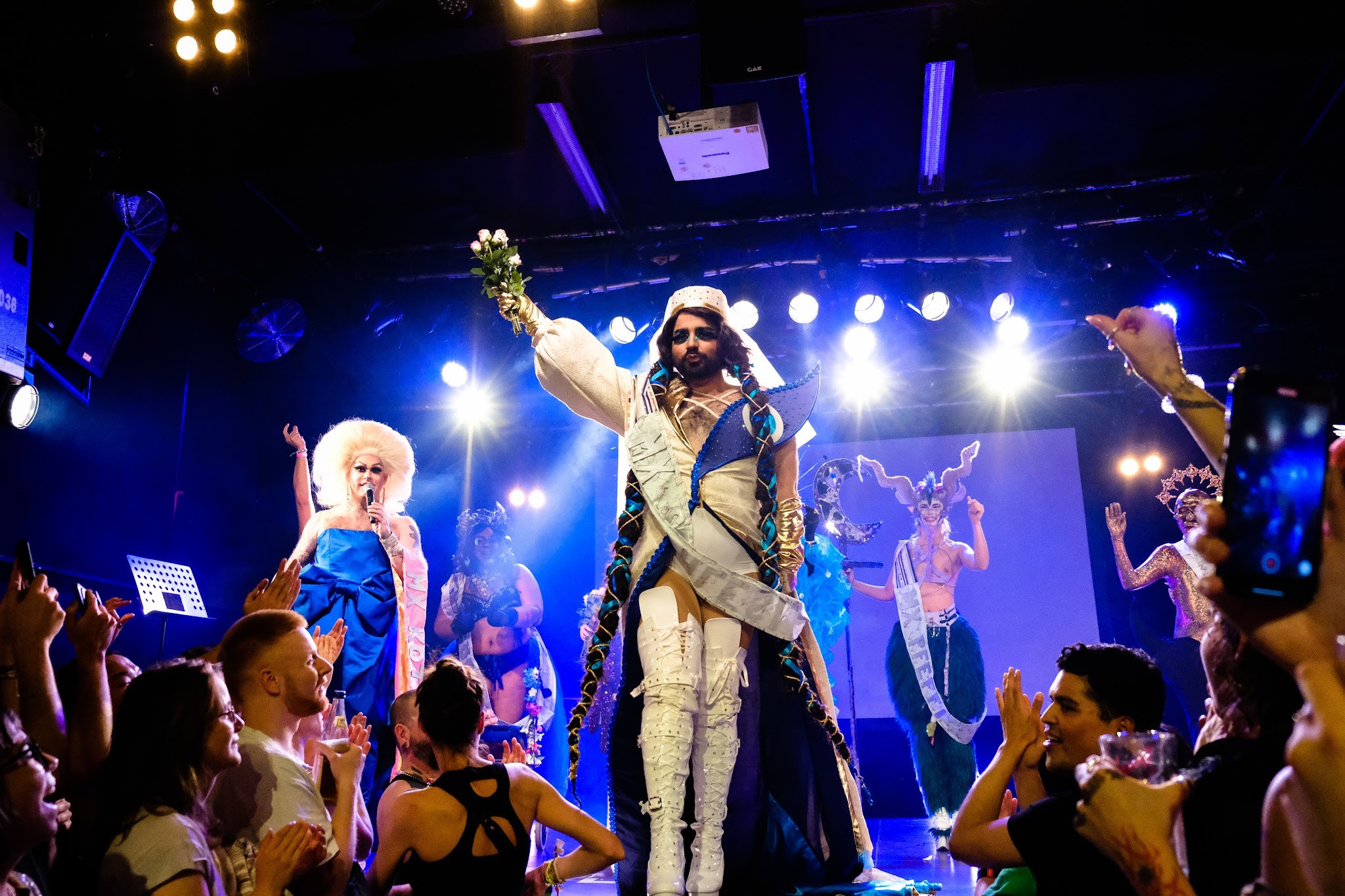
For the Mx. Kotti Pageant, one of Berlin’s most prestigious community pageants which happens once a year, Aurah created a deeply personal piece exploring masculinity across three generations of their family.
“I started by embodying a patriarch from my grandfather’s era,” they explain. “Authority. Silence. Dominance.” Draped in a white cloak and massive hat, Aurah stood immobile, “like the Caucasus mountains.”
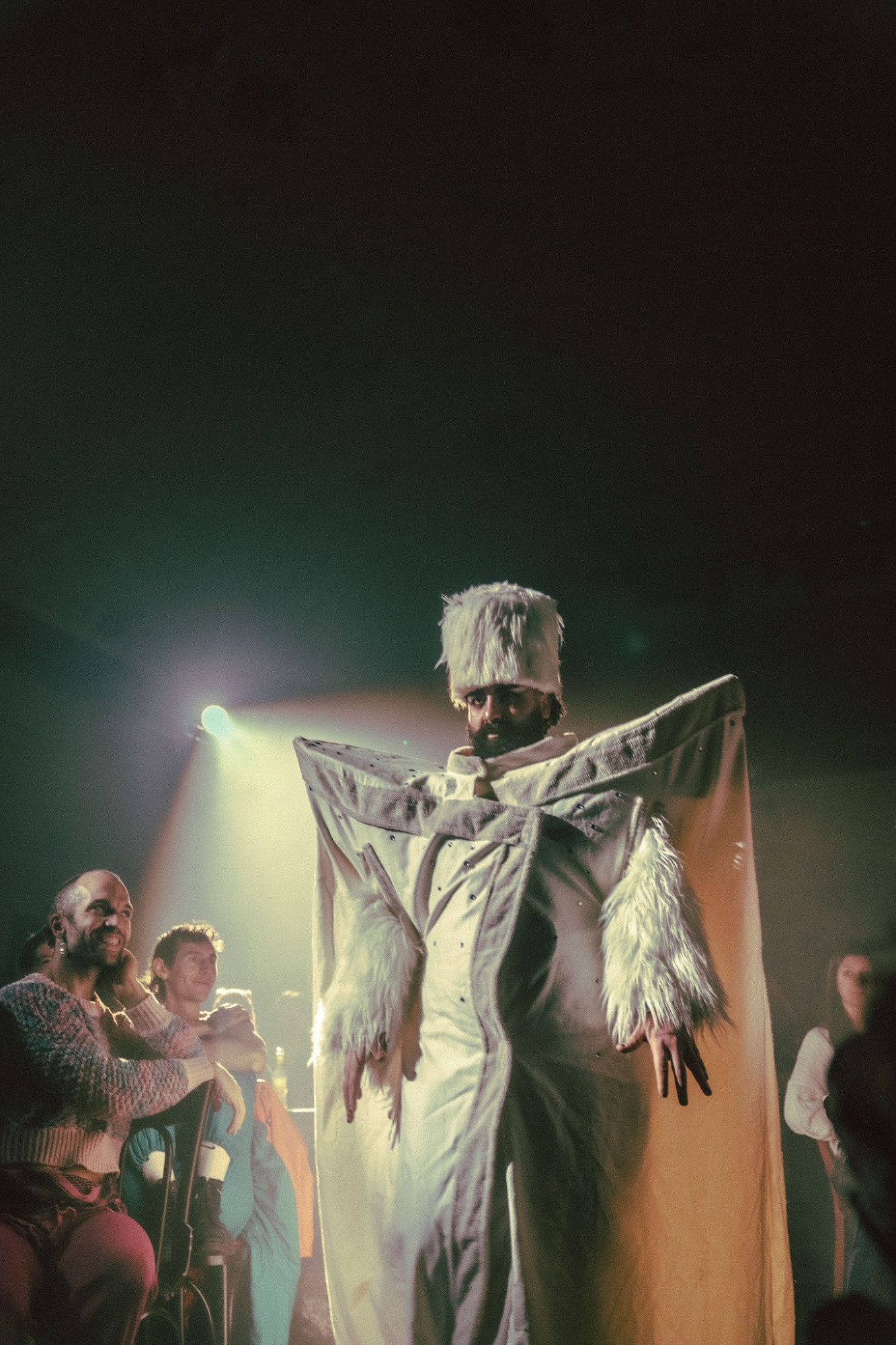
p/b Nat Gass (@natgass)
A costume reveal followed, embodying the masculinity imposed by their older brother: toughness, coolness, swaggy. “Even that version would be a failure by my grandfather’s standards,” Aurah notes.
Finally, they stepped into their own gender expression. “We all use the same word, masculinity, but it means completely different things,” Aurah says. “You don’t even have to challenge heteronormativity to see how contradictory it all is.”
“That performance opened a lot of doors,” they say. Bookings increased. Stages got bigger. Years later, they are still performing the piece. “I think it hit a nerve.”
Coming Out and Loosing
Aurah first came out to their sister in 2015. “She cried. She said she loved me, but in the same moment, I could really feel her fear,” Aurah recalls. “She begged me never to tell anybody else, especially our parents.”
That fear lingered for five years, shaping Aurah’s sense of caution and the unspoken boundaries in their family. “I waited five more years to tell my brother,” Aurah says. “I needed to understand the story in total first.”
During a COVID lockdown, Aurah finally told their brother. “We were outside, the whole city was empty, and I just found that moment and said it,” Aurah recalls. “He hugged me immediately. He said all the beautiful, loving words of support, and even offered to help open the conversation with our parents.” His reaction was, in Aurah’s words, “textbook perfect.”
p/b Manima (@maniimasoul)
The relationship with the brother became central. “He really helped me feel safe,” Aurah says. “He made it possible to talk about it without fear.” Over time, Aurah noticed that the family dynamic had shifted. Conversations about identity became rare.
“They don’t ask anything anymore,” Aurah explains. “It’s like it’s an uncomfortable topic. If you bring it up, it opens a discussion they don’t want to have.” Aurah learned to navigate this delicate balance, being seen but not questioned, understood but not challenged.
Aurah eventually came out to their mother, whose response was emotional. “She struggled to understand me, but made sure I knew she would always love me,” Aurah remembers. Their father never knew. Both of Aurah’s parents have since passed away.
Despite the complexities and silences, Aurah reflects on the support from their brother as transformative. “He became my anchor,” Aurah says. “With him, I could be honest and authentic, and it gave me the courage to navigate the rest of the family.”
The kitchen memory remains a symbol of everything that was withheld in the name of love.
Qaucasia, A Space Shuttle for the Queer Caucasus
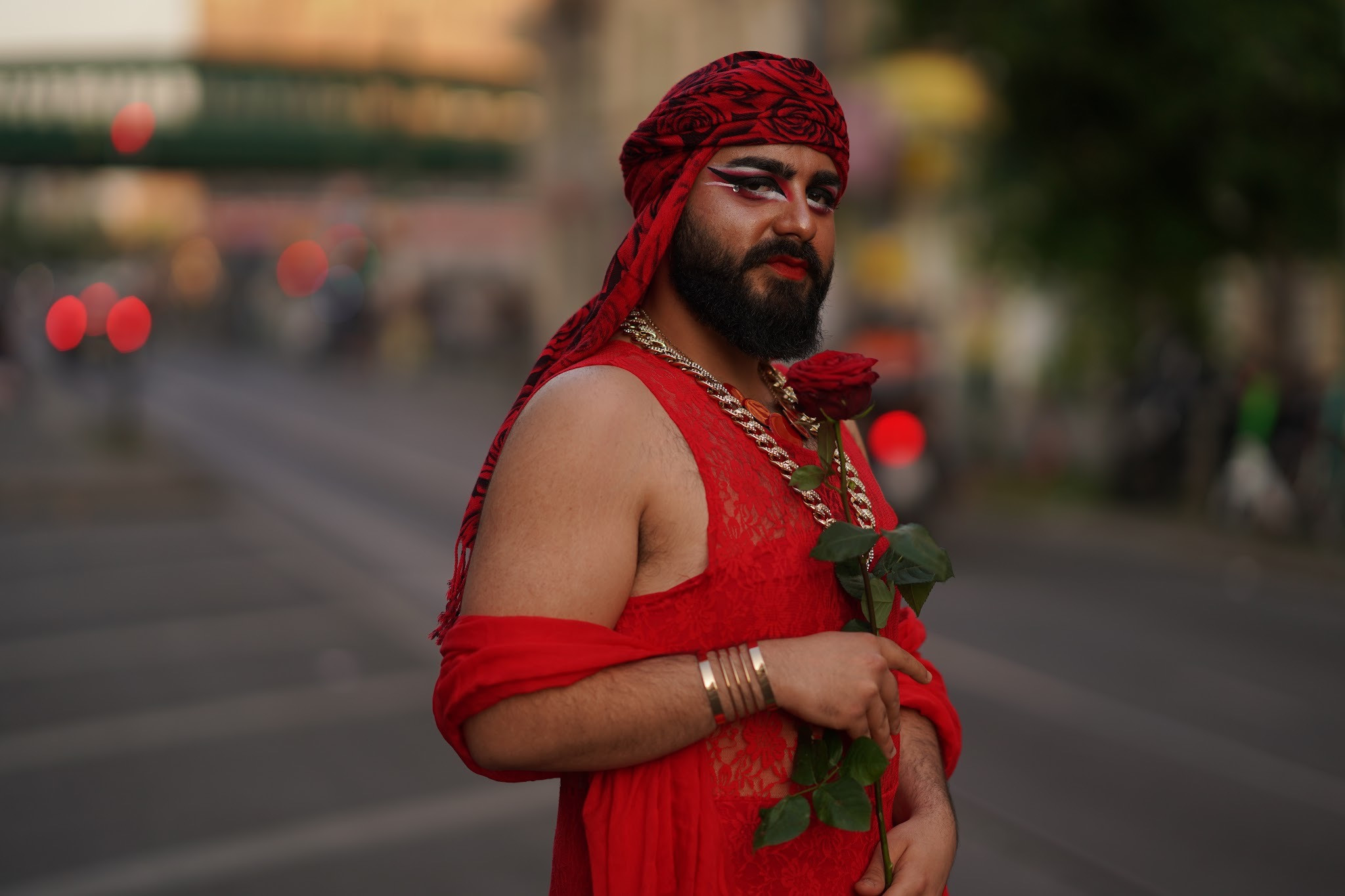
Out of the deep desire for connection and community, Aurah created Qaucasia, a queer drag and variety show dedicated to artists from Azerbaijan, Armenia, and Georgia. “I was tired of being booked as the ‘exotic’ person,” they say. “I wanted to tell my story fully, to connect the dots and build a bridge”
Written with a Q for Queer Caucasus, the project challenges both regional nationalism and Western misconceptions. “These eyebrows were not made in Sweden,” Aurah jokes, winking at the odd American habit of labeling white Europeans as ‘Caucasian.’ “They were made in Maştağa.”
The first show in Berlin at the Tipsy Bear Bar sold out. People cried afterwards, thanking Aurah for playing Azerbaijani, Armenian, and Georgian songs in a queer bar. “We realized this wasn’t about novelty,” Aurah says. “It was about need.”
Qaucasia has since traveled to major European festivals. “I thought I was alone,” Aurah says. “And suddenly, we were everywhere.”
p/b Diego Sixx (@itsdiegosixx)
Beyond Fear
Aurah doesn’t romanticize the risks. “I don’t think I’d feel safe performing in Azerbaijan,” they admit. “But safety wouldn’t be the first question in my head.”
Their visibility, they believe, is a public service. “I know I'm not the first, and I won’t be the last,” Aurah says. “I'm doing this so the people after me might have it a little easier.”
At 33, Aurah is preparing for another transformation. In 2026, they plan to return to music, this time on their own terms. “Drag gave me the full color palette,” they say. “Now I can choose and I choose to become an international Popstar.”
Once marked as awrah (عورة), something shameful to cover, Aurah Jendafaaq has turned exposure into power.
“If the world refuses to give me the roses I deserve,” they say, “I'll plant my own rose garden and let them watch it grow.”
And in doing so, they inspire other people to plant their own gardens.
Powered by Froala Editor