

WorldPride Amsterdam 2026
A celebration shaped by protest, politics and the fight for safety
 15/Sep/26
 284
284
WorldPride Amsterdam 2026: A celebration shaped by protest, politics and the fight for safety
From celebration and protest to the Berlin attack, the human rights conference, Pride Awards and the final march, Minority Magazine visited WorldPride Amsterdam 2026, here’s what happened.
For two weeks, from 25 July to 8 August, Amsterdam became the meeting point of the global LGBTIQ+ movement as the city hosted WorldPride for the first time. Under the theme “UNITY,” hundreds of thousands of people took part in marches, the famous Canal Parade, concerts, parties and cultural events, while activists, politicians and human rights defenders gathered to debate the growing threats facing queer communities around the world.
The timing was significant. In 2026, the Netherlands is marking 25 years since it became the first country in the world to legalise same-sex marriage. But WorldPride was far from being only a celebration of that achievement. Across the two weeks, questions about political backlash, violence, trans rights, Palestine, corporate involvement and the future of the Pride movement were impossible to separate from the celebrations.
A Pride held in the shadow of Berlin
The 25 July attack at Berlin's Christopher Street Day, which killed one person and injured more than 30 others, was present throughout WorldPride, and particularly during the Human Rights Conference.
It was not simply discussed as a security incident. Speakers repeatedly returned to what it meant for queer people to continue gathering publicly after an attack on another Pride event in a neighbouring country.
When Dutch Prime Minister Rob Jetten opened the Human Rights Conference on 5 August, he began by referring directly to Berlin, saying the attack had filled him with “anger and sorrow.” He also recalled the gathering at Amsterdam's Homomonument, where people had laid flowers and lit candles for the victims.
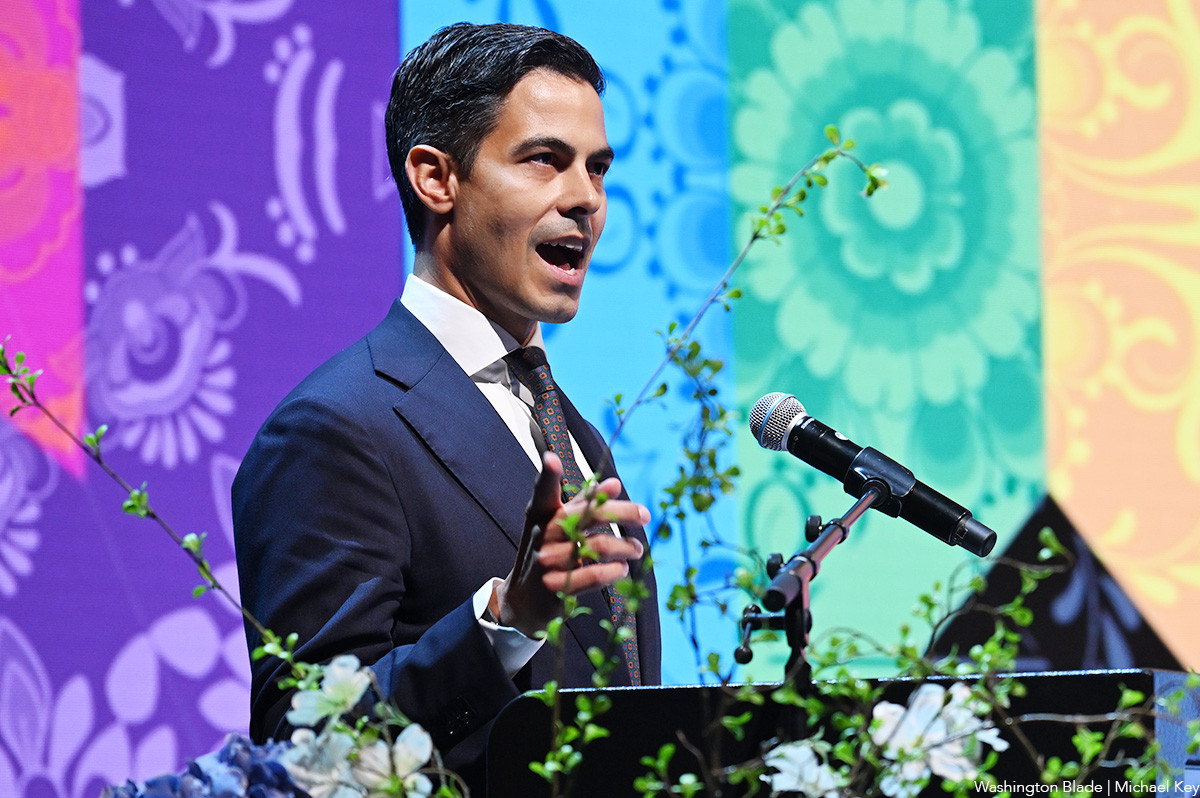
The attack remained part of people's narrative throughout the conference, a reminder that the right to gather, celebrate and be visible cannot be taken for granted, even in places where Pride has become a major public event.
Amsterdam also increased security around the Canal Parade, with both visible and covert measures. Still, organisers and participants repeatedly stressed that fear should not force queer people back into invisibility.
The Canal Parade: celebration and politics on the same boats
On 1 August, hundreds of thousands of people filled Amsterdam's canals for the city's iconic Canal Parade. Around 80 boats travelled through the city, including community groups, political organisations, companies and international participants. Prime Minister Jetten was among those taking part.
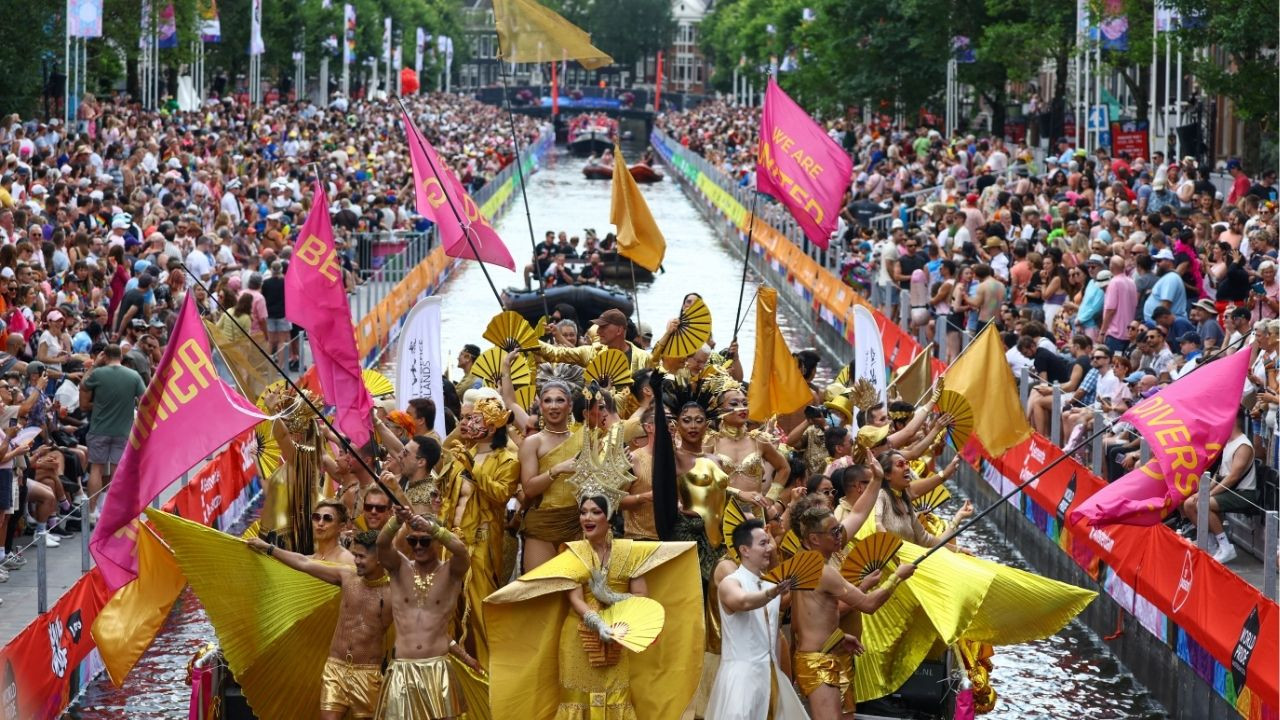
The parade was colourful and celebratory, but it was also political. Boats carried messages about equality, intersex rights and Palestine, while satirical depictions of political leaders appeared alongside rainbow flags and Pride slogans.
That combination, celebration and protest, defined much of WorldPride.
Three days focused on human rights
From 5–7 August, the Beurs van Berlage hosted the WorldPride Human Rights Conference, bringing together activists, politicians, researchers and community organisers from around the world. The programme covered rights and governance, health and wellbeing, heritage and culture, resources and leadership, as well as trans, non-binary and intersex issues.
The conference was fully booked, with 1,000 places, and featured figures including Jetten, Amsterdam Mayor Femke Halsema, former Irish Prime Minister Leo Varadkar, former Icelandic Prime Minister Jóhanna Sigurðardóttir, former Luxembourg Prime Minister Xavier Bettel, Venezuelan trans rights activist Tamara Adrián and Pakistani activist Nayyab Ali.
Jetten warned that hatred against LGBTIQ+ people is becoming increasingly visible, particularly online, and announced €7.5 million per year for three years for measures aimed at improving queer safety and tackling discrimination and misinformation. He also warned that trans people are increasingly being used as a political target and that attacks on one part of the community can eventually threaten others.
But even the human rights conference became a site of protest
Jetten's opening speech was interrupted by protesters criticising the Dutch government's position on Palestine. Activists shouted “No Pride in Genocide” before being removed from the room by security.
The protest reflected a wider debate that followed WorldPride throughout Amsterdam: can Pride claim to be a movement for human rights while remaining silent about other forms of violence and oppression?
Palestine-related messages also appeared during the Canal Parade, making the issue impossible to separate from the broader politics of the event.
Corporate involvement was another point of debate. Major companies and institutions supported and participated in WorldPride, while the Human Rights Conference itself included discussions about pinkwashing and whether corporate Pride sponsorship represents genuine solidarity or simply reputation management.
From Madonna to the International Pride Awards
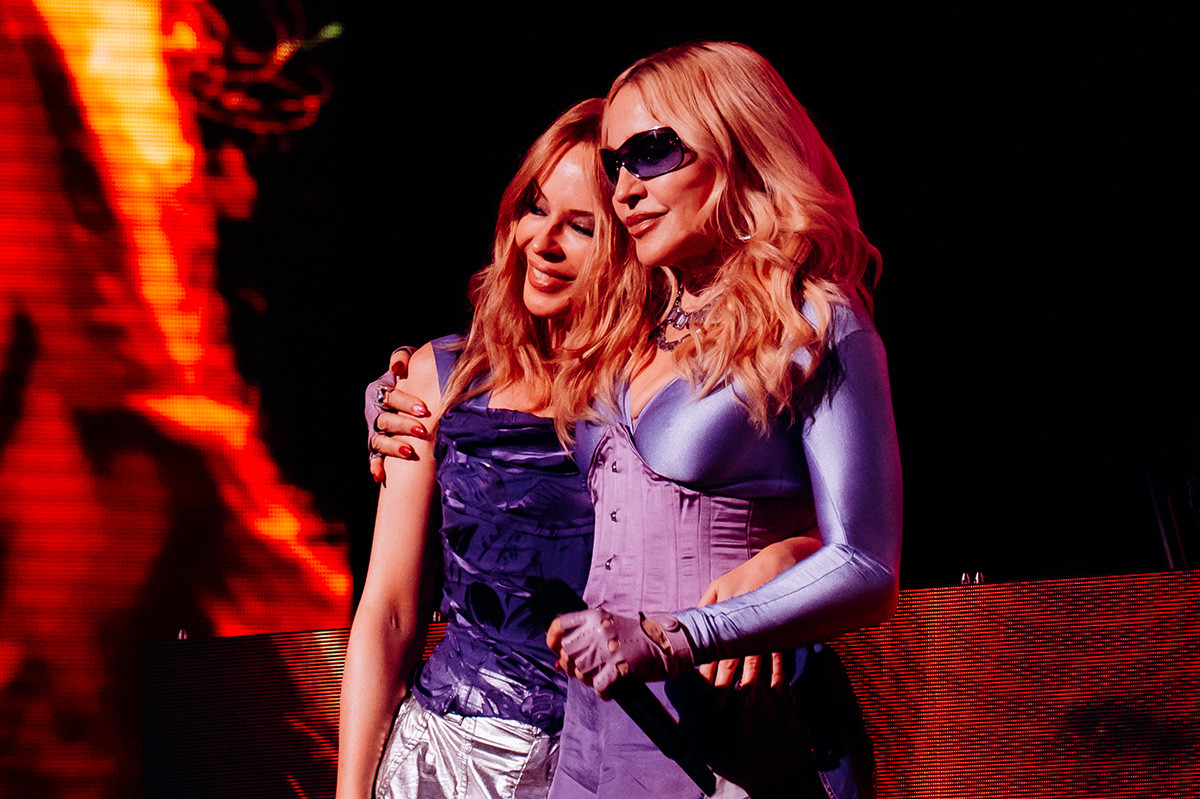
Madonna performed at AFAS Live on 1 August, with Kylie Minogue making a surprise appearance. At Museumplein, the UNITY Concert brought together artists including Billy Porter, Beth Ditto and Joss Stone, while the 6 August Wedding Party XXL celebrated 25 years of marriage equality with performances by Billy Porter, Bimini, KI/KI and the Vengaboys.
At the same time, the 2026 International Pride Awards, presented by ILGA World and UNDP, honoured five people and organisations for their contributions to LGBTIQ+ equality: COC Nederland, Aggie Dennett Harmon, Mmapaseka Steve Letsike, Marcela Dimonty and Dr Satendra Singh.
The awards recognised work ranging from trans rights and community organising in Uganda and South Africa to queer history in Chile and inclusive healthcare in India.
8 August: WorldPride March
The two-week programme ended on 8 August with the WorldPride March, which began at Martin Luther Kingpark and moved towards Museumplein.
Tens of thousands joined the march, which organisers described not simply as a parade but as a demonstration of visibility, solidarity and resistance.
After the Berlin attack, that message carried particular weight.
WorldPride ended that evening with a closing concert at Museumplein. But the most important message of the two weeks was perhaps not about how large the celebration had become.
It was that Pride is still necessary.
Amsterdam could celebrate 25 years of marriage equality, fill its canals with 80 boats and bring global pop stars to its stages. But throughout the same two weeks, people were talking about violence, political backlash, trans rights, Palestine, corporate power and the safety of queer people.
For many participants, the Berlin attack remained in the background, and sometimes at the centre, of those conversations.
That tension is what made WorldPride Amsterdam 2026 more than a festival: a celebration of what has been won, a protest against what is being lost, and a reminder that visibility itself can still be an act of resistance.
Powered by Froala Editor