

22 January— remembering Isa Shahmarli
On 22 January, queer communities in Azerbaijan mark a locally recognised day of resistance against homophobia
 22/Jan/26
 1445
1445
22 January— remembering Isa Shahmarli
On 22 January, queer communities in Azerbaijan mark a locally recognised day of resistance against homophobia, commemorating the death of Isa Shahmarli, an openly gay activist and founder of Azad LGBT, who died by suicide in 2014 at the age of 20.
Shahmarli was among the first publicly visible queer voices in Azerbaijan. As the head of Azad LGBT, he sought to challenge entrenched stigma through public advocacy, media appearances, and online engagement at a time when visibility itself carried serious social risk. In interviews, he spoke openly about family rejection and widespread prejudice, urging LGBTQI+ people to resist silence and fear. His activism unfolded in a restrictive political and social environment that offered no legal protections for sexual minorities beyond the decriminalisation of same-sex relations.
On 22 January 2014, Shahmarli was found dead in his Baku office after hanging himself with a rainbow flag. In a farewell message posted shortly before his death, he explicitly blamed homophobic society for his decision, writing that the world was “not colourful enough” for him.
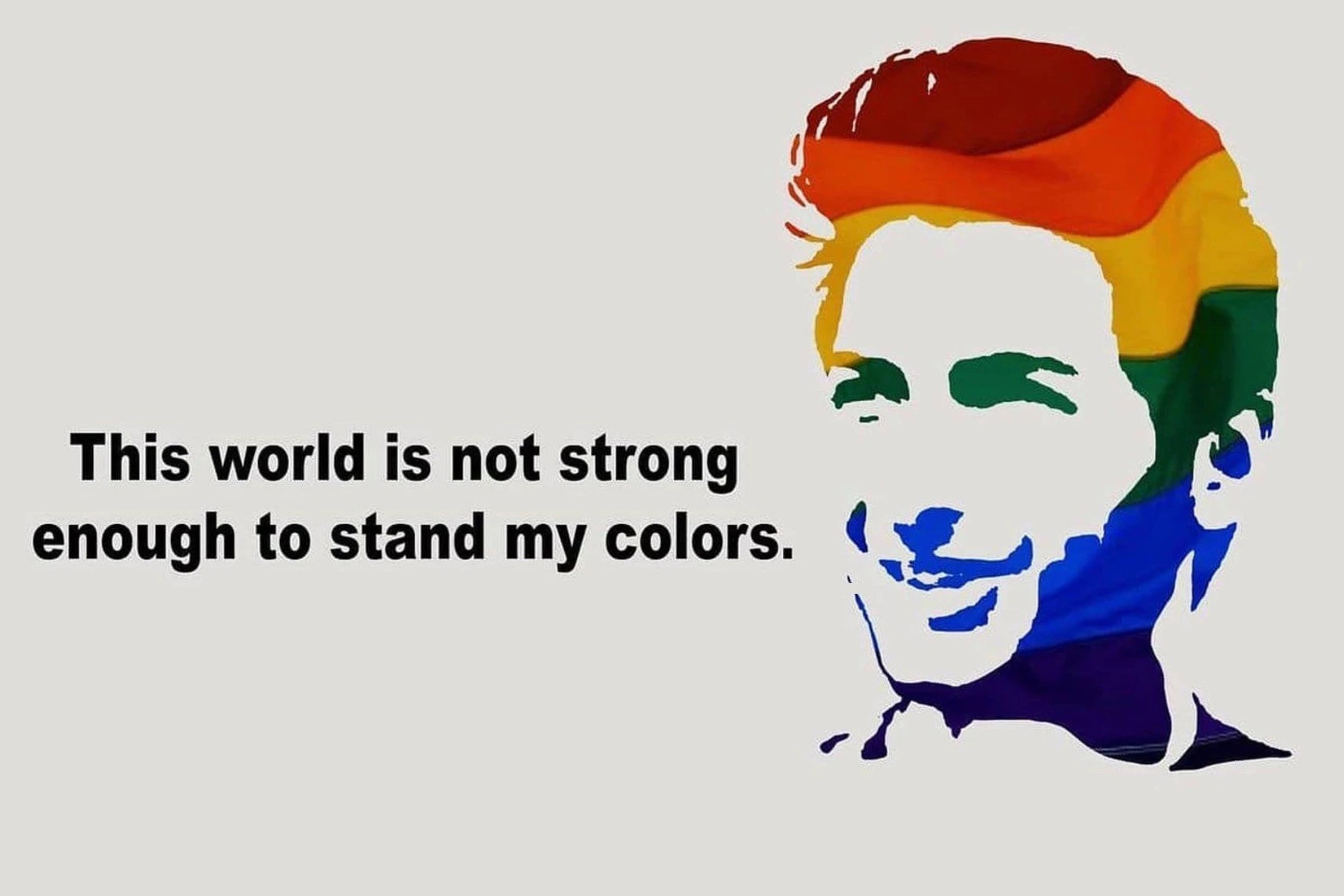
“I am leaving. This country and this world are not for me.… I am leaving to become happy… Tell my mom I love her. You are all to blame for my death. This world is not strong enough to stand my colours. Goodbye.”
News of his death prompted strong reactions inside and outside the country. Friends and activists attending his funeral were attacked, and a rainbow flag placed on his grave was destroyed. For days afterward, community members guarded the site to prevent further desecration.
Shahmarli’s death marked a turning point for queer organising in Azerbaijan. What had previously been limited, largely educational advocacy shifted toward more overt political visibility and collective resistance. Since then, 22 January has been commemorated annually by queer groups as a day to remember Shahmarli and to confront homophobic hatred—both social and institutional—that continues to shape LGBTQI+ lives in the country.
More than a decade later, activists say the conditions that Shahmarli faced persist, increasingly embedded within state institutions. While homosexuality remains legal, Azerbaijan has no comprehensive anti-discrimination legislation protecting LGBTQI+ people. Reports of police abuse, harassment, and societal violence continue, and public officials have repeatedly used stigmatizing language without accountability.
As queer communities mark 22 January this year, Shahmarli’s legacy remains closely tied to the present. His death exposed the human cost of queerphobia in a society where queer lives were rendered disposable. Twelve years on, activists say the challenge is no longer only visibility, but accountability—ensuring that discrimination is neither normalised nor codified by the institutions meant to uphold justice.
For many, 22 January is both a day of mourning and a reminder that resistance remains necessary. The conditions Shahmarli named in his final message have not disappeared; they have, in many cases, taken more formal and official forms.
Powered by Froala Editor